

 Operating Hours 10 am to 5 pm (Monday to Friday)




Description
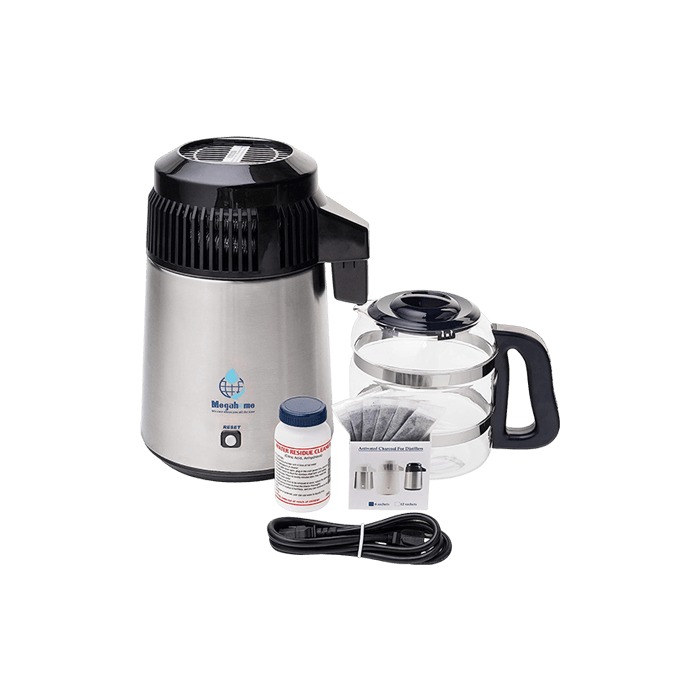
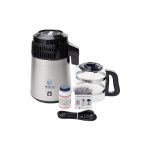
Introducing the 316 Stainless Steel Megahome Water Distiller: Australia‘s best benchtop water distiller. Providing the purest water for a healthier lifestyle, Megahome is the leading producer of high-quality water distillers. Customers appreciate the purity delivered by its premium stainless steel benchtop models.
In addition, countertop water distillers offer a convenient and compact solution for purifying water in any kitchen or space. These compact units sit comfortably on a countertop, making them easy to access for daily use. Despite their small size, countertop water distillers are powerful and efficient, capable of effectively removing impurities, contaminants, and even bacteria from water.
Who Should Buy the Megahome Water Distiller?
Experience distillation excellence. Crafted from marine-grade 316 stainless steel, the Megahome Distiller delivers unmatched purity for your Australian home. Renowned for exceptional durability, superior craftsmanship, and trusted performance, it removes fluoride and contaminants, giving your family the ultimate in pure hydration.
Why Megahome Stands Out:
-
Pure Water, Pure Simplicity: Portable, easy to use, and effortless to clean. No installation needed—just fill, plug in, and turn on.
-
Remarkable Value: Produces the cleanest water at an economical cost per litre.
-
Powerful & Versatile: Distills 4 litres in 5.5 hours from any source (town, tank, or bore). Automatic shut-off ensures safety and convenience.
-
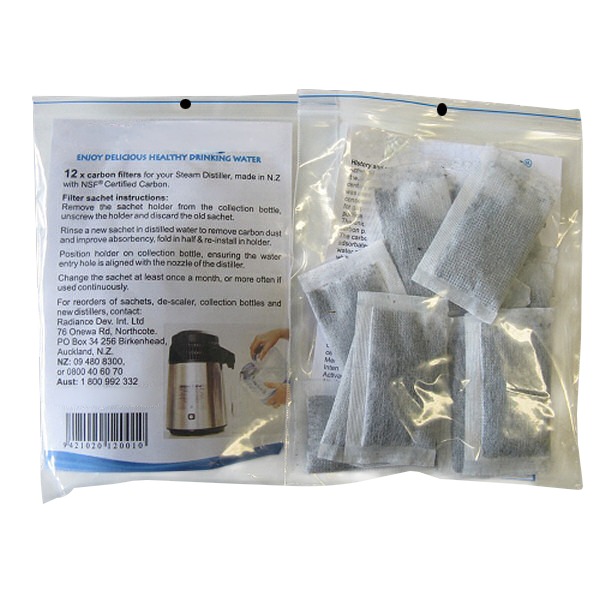
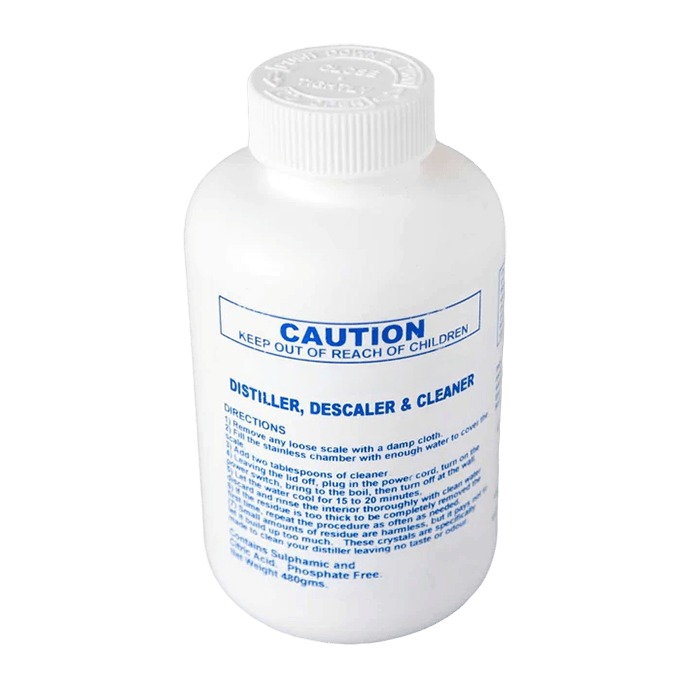
Complete Peace of Mind: Includes a 6-month supply of Activated Carbon Filters (removes chlorine and VOCs), a descaler, a cleaner, and a 12-month warranty.
-
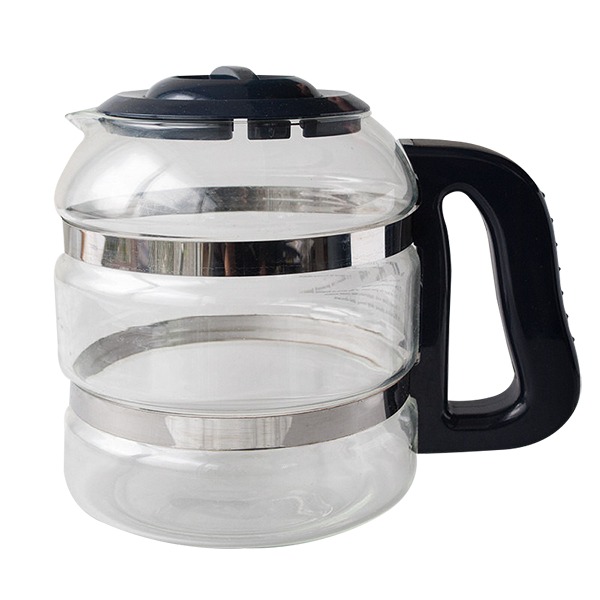
Safe Water Collection: Collect clean water in a 4 L glass jug.
-
Built to Last & Protect: High-grade 316 stainless steel construction—boiling chamber, cooling coil, and sleek exterior—ensures durability and purity.
Features of the Megahome Water Distiller Glass Jug Kit
- Glass BPA-Free Jug
- The MH-943SBS is Megahome’s stainless-steel countertop distiller, with a #16 stainless-steel boiling chamber and steam dome.
- 316 marine-grade stainless-steel boiling chamber and steam dome
- 4 litres per batch, about 5.5–6 hours in independent reviews, at a true 100°C / 212°F
- Distillation separates non-volatile substances such as dissolved solids, heavy metals, fluoride and nitrate; the activated-carbon post-filter handles chlorine, taste and volatile compounds.
- Glass or PP collection bottle, depending on the version · if you prefer the water not to sit in plastic, choose the glass bottle
- Automatic shut-off · no plumbing, no installation
Precision-made in Taiwan by Megahome Corporation since 1992 · sold in 60+ countries · what owners and reviewers say.
The Megahome Water Distiller Glass Jug Kit Effectively Removes
- Parasites & Cysts
- Cryptosporidium & Giardia
- Bacteria
- Sediment, Dirt, Rust
- Salmonella
- Cholera
- E. Coli Bacteria
- Residual Chlorine Content
- Bromodichloromethane
- Bromoform
- Chloroform
- Dibromochloromethane
- Zinc
- Iron
- Lead
- Manganese
- Cadium
- Copper
- Mercury
- Aluminium
- Barium
- Chloramines
- Chlorine
- Chromium
- Taste
- Other Heavy Metals
- Hydrocarbons
- Nitrate
- PCB’s
- Potassium
- Radium
- Sodium
- Odour
- Microplastics
- *PFAS “Forever Chemicals”
- PLUS MORE
The Water Distiller Filtration Process
- Heat water to a boil and convert it to steam. All impurities remain in the boiling chamber; the steam passes through the internal cooling coil and condenses into pure water. Collect the pure water in a glass storage jug.
|
Dimensions (System) |
36H x 23W x 40D cm |
|
Filter output |
4 litres (5.5 – 6 Hours) |
|
Max flow rate |
n/a |
|
Micron rating |
N/A |
|
Warranty |
12 months. Terms and conditions apply |
A household drinking-water distiller for drinking water and general domestic or office use.
It is not a medical device, steriliser, or laboratory water system. It distils at 100°C at atmospheric pressure—below the temperature and pressure required for sterilisation —and does not kill bacterial spores.
- Do not use it to clean, disinfect or sterilise medical or dental instruments. That requires a validated autoclave.
- The water it makes is purified water, not sterile water. Do not use it to prepare water for injection, wound irrigation or contact-lens solution.
- Distilled water only — never petroleum products, isopropyl alcohol, high-concentration alcohol or other hazardous liquids.
With a CPAP or any other medical-adjacent device, follow that device manufacturer’s instructions.
Does distillation remove PFAS “forever chemicals”?
This is where honesty matters most. PFAS are a family of thousands of man-made compounds.
The ones most often measured in drinking water, such as PFOA and PFOS, are present in a dissolved, ionised form and do not readily evaporate with the steam — so the physics of distillation suggests they remain in the boiling chamber, just as salts do.
However:
- Independent, peer-reviewed data on countertop distillers and PFAS is limited. Most published removal figures come from distiller sellers, so we do not quote them here.
- The US EPA’s consumer page on reducing PFAS at home lists granular activated carbon, reverse osmosis and ion-exchange resins, and recommends products certified to NSF/ANSI 53 or 58 for PFAS reduction. Distillation is not mentioned.
- Some PFAS-related compounds are more volatile than PFOA and PFOS. Those are the kinds of substances an activated-carbon stage is meant to catch—one more reason to replace the carbon post-filter on schedule.
The fair summary: distillation is expected to significantly reduce the common PFAS, but it is not a certified PFAS technology.
Moreover, if your water supplier reports PFAS above the local limit, follow its advice and your health authority’s guidance first.
How does a distiller separate contaminants from water?
A countertop distiller heats water in a stainless-steel boiling chamber until it turns to steam. The steam rises, is cooled by a fan-driven condenser and turns back into liquid in a separate collection bottle.
Anything that cannot evaporate at water’s boiling point — dissolved metals, salts, minerals — has no way to follow the steam, so it stays in the chamber. That is why owners find a layer of scale to rinse out after every batch.
The same principle explains the method’s one real weakness. Substances that evaporate as easily as water, or more easily, can travel with the steam.
The University of Nebraska–Lincoln’s extension guide on distillation names volatile organic compounds such as benzene and toluene, and notes that they are not completely removed unless another process is added — for example, an activated-carbon filter on the condensed water.
Megahome distillers use exactly that arrangement: the condensed water passes through an activated-carbon post-filter before it reaches the bottle.
Does a water distiller remove fluoride?
Yes. Fluoride is dissolved in water as a mineral ion and does not boil off at 100 °C. The University of Nebraska–Lincoln guide lists fluoride among the compounds distillation removes, along with sodium, calcium, magnesium, and nitrate.
In practice, distilled water contains very little fluoride, whatever the level in the water you pour in.
Whether you want that is a separate question. Many health authorities support fluoride in community water for dental health, and some households prefer to manage their intake themselves.
Does a water distiller remove lead?
Yes. The US Centres for Disease Control and Prevention (CDC) lists lead among the chemicals distillation removes, together with arsenic, barium, cadmium, chromium and nitrate. Lead is a metal; it stays in the boiling chamber.
Two points are worth knowing:
- Boiling a kettle is not the same thing. The US EPA answers the question “Does boiling water remove lead?” with a plain “No”. When you boil water in an open pot, some water evaporates, and the lead stays behind in a smaller volume. A distiller does the opposite: it keeps the steam and leaves the residue.
- Lead usually comes from the building, not the source. Old service lines, solder and some older fittings are the typical causes, and levels can vary from tap to tap and hour to hour.
A distiller protects the water you drink and cook with; it does not fix the plumbing. If you suspect lead, have your water tested and ask your water supplier about replacing your pipes.
Does distillation remove PFAS “forever chemicals”?
This is where honesty matters most. PFAS are a family of thousands of man-made compounds.
Also, the ones most often measured in drinking water, such as PFOA and PFOS, are present in a dissolved, ionised form and do not readily evaporate with the steam — so the physics of distillation suggests they remain in the boiling chamber, just as salts do.
However:
- Independent, peer-reviewed data on countertop distillers and PFAS is limited. Most published removal figures come from distiller sellers, so we do not quote them here.
- The US EPA’s consumer page on reducing PFAS at home lists granular activated carbon, reverse osmosis and ion-exchange resins, and recommends products certified to NSF/ANSI 53 or 58 for PFAS reduction. Distillation is not mentioned.
- Some PFAS-related compounds are more volatile than PFOA and PFOS. Those are the kinds of substances an activated-carbon stage is meant to catch—one more reason to replace the carbon post-filter on schedule.
Furthermore, distillation is expected to significantly reduce the common PFAS, but it is not a certified PFAS technology. If your water supplier reports PFAS above the local limit, follow its advice and your health authority’s guidance first.
Contaminant by contaminant: what should you expect?
| Contaminant | What distillation does | Keep in mind |
|---|---|---|
| Fluoride | Stays in the boiling chamber | Talk to your dentist if distilled water is your main source |
| Lead, arsenic, cadmium, chromium | Stay in the boiling chamber | Boiling alone does not remove lead; test water from old pipes |
| Nitrate | Stays in the boiling chamber | Boiling in an open pot concentrates it instead |
| PFAS such as PFOA and PFOS | Expected to be significantly reduced | Limited independent data; not an EPA-listed home PFAS method |
| Bacteria, viruses, parasites | Removed | Keep the collection bottle clean |
| Chlorine, chloramines | Removed | The carbon post-filter polishes taste |
| VOCs (e.g. benzene, toluene), some pesticides | Can carry over with the steam | This is the job of the activated-carbon post-filter |
How do you get the best results from your Megahome Water Distiller?
- Test before you decide. Your water supplier’s quality report or a certified laboratory test tells you which contaminants you are actually dealing with.
- In addition, replace the carbon post-filter on schedule. For normal tap water, follow the manual (owners commonly change it about weekly in daily use). For water of uncertain quality, such as well or stored water, Megahome recommends a new sachet every 5 batches (20 litres).
- Moreover, descale regularly. The University of Nebraska–Lincoln guide notes that scale makes a distiller less efficient and raises electricity use. Citric acid works well; hard water needs it more often.
- Furthermore, keep scale under control. The distiller switches itself off automatically, so no timer is needed — please do not use a plug-in timer: many are not built for a heating appliance’s continuous load, a weak contact can cause a voltage drop that strains the heater and thermal switch, and damage caused by a timer is not covered by the warranty. A light layer of scale after each batch is normal; descaling at least once per batch with Descaler, as described in the user manual, takes care of it.
- In addition, set realistic expectations. A 4-litre batch takes about 5.5–6 hours, and the fan is audible — many owners run it in a kitchen or utility room.


 Request a Call Back
Reviews
There are no reviews yet.