

 Operating Hours 10 am to 5 pm (Monday to Friday)


Reverse Osmosis Filter Replacement Schedule Explained
 4 October 2026
Online Water Filters
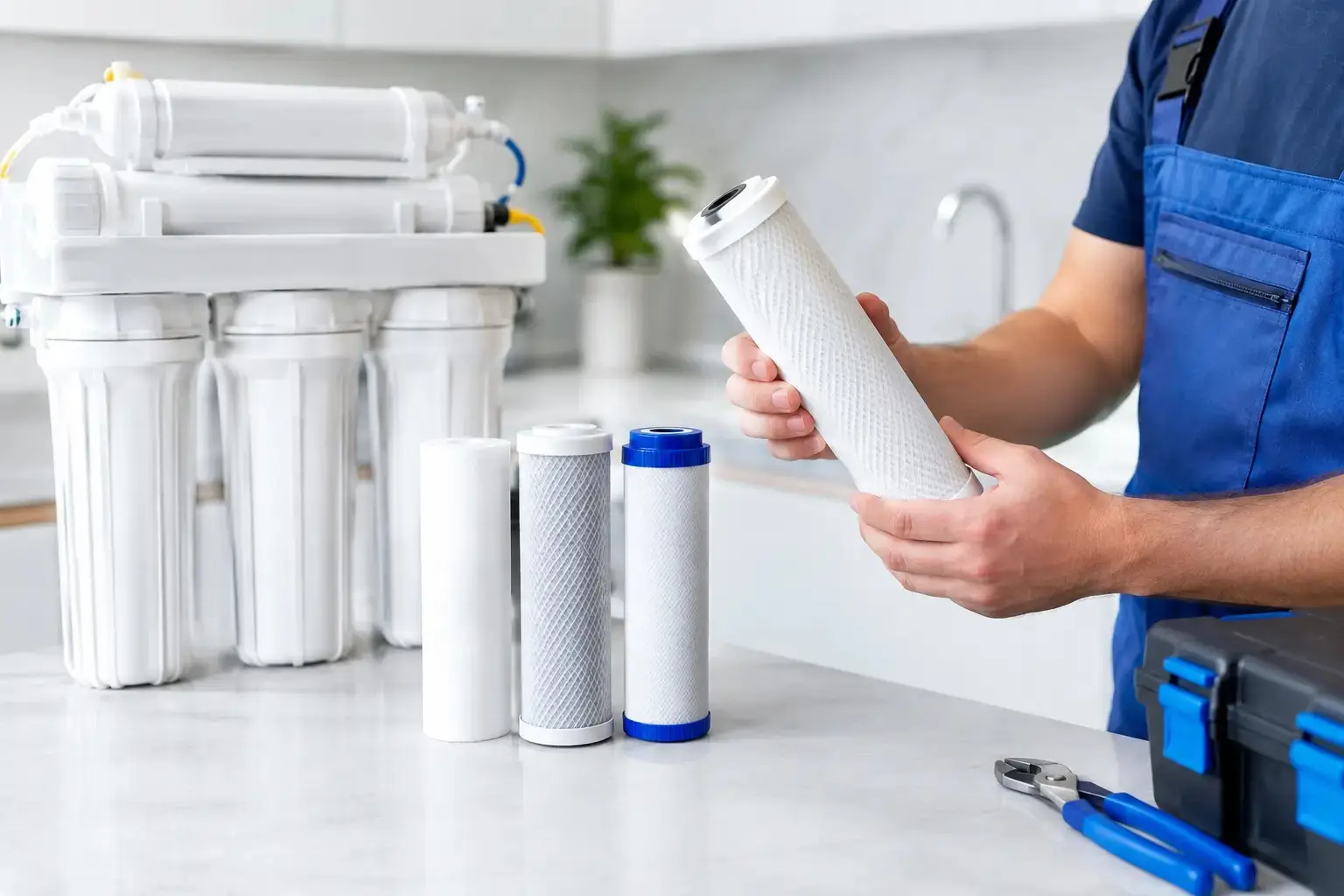
A reverse osmosis filter replacement schedule is not just a maintenance reminder. It is what keeps your system delivering the clean-tasting, high-quality drinking water you chose it for. When cartridges are left in service too long, they can restrict water flow, reduce contaminant reduction and place unnecessary pressure on the reverse osmosis membrane.
For Australian households, the right timing depends on your local water supply, how much water your family uses and the design of your system. A busy household on heavily treated mains water may need earlier changes than a couple using their RO unit only for drinking and cooking. The schedule below is a reliable starting point, but your manufacturer’s instructions should always take priority.
A practical reverse osmosis filter replacement schedule
Most underbench reverse osmosis systems use several stages. Each stage has a different job, so it also has a different expected service life.
| Filter or component | Typical replacement timing | Why it matters | |—|—:|—| | Sediment pre-filter | Every 6 to 12 months | Captures dirt, rust, sand and fine particles before they reach later stages. | | Carbon pre-filter | Every 6 to 12 months | Reduces chlorine and other treatment chemicals that can damage the RO membrane. | | Reverse osmosis membrane | Every 3 to 5 years | Performs the main dissolved-contaminant reduction. | | Post-carbon polishing filter | Every 12 months | Improves final taste and odour before water reaches your tap. | | Remineralisation cartridge, if fitted | Every 6 to 12 months | Restores selected minerals and may improve taste and pH. |
Many standard systems use a six-month interval for sediment and carbon pre-filters, and an annual interval for the post-carbon cartridge. The membrane usually lasts much longer because the pre-filters protect it. Neglect those lower-cost pre-filters, however, and an expensive membrane can wear out much sooner.
Some compact systems use combined cartridges rather than separate filter housings. Others use proprietary quick-change filters. The timing principle remains the same, but always match the replacement cartridge to your exact system and model. A cartridge that looks similar may not seal correctly, fit the housing or provide the intended filtration performance.
Why pre-filters usually need changing first
The sediment and carbon stages do the hard work before water reaches the membrane. Sediment filtration catches physical particles that can clog fine membrane channels. Carbon adsorption helps reduce chlorine, chloramines and certain chemicals, depending on the cartridge media and rating.
This protection is especially valuable on chlorinated mains water. Standard RO membranes are sensitive to chlorine exposure, while chloramines can require specialised catalytic carbon media for effective reduction. If your local supply uses chloramines, choose a compatible pre-filter rather than assuming every carbon cartridge performs the same way.
As these filters load up, water may take longer to pass through the system. That can mean a slower flow from the dedicated tap, reduced water production or a tank that takes much longer to refill. A slow tap is not always caused by the filters, but it is one of the first things worth checking.
When to replace filters earlier than scheduled
A calendar is useful, but your water system can give you clues that it needs attention sooner. Changes in taste, smell or flow deserve a closer look, particularly if the system previously performed well.
Replace filters early if you notice any of the following:
- A clear reduction in flow from the filtered-water tap
- A return of chlorine taste, chemical odour or an unpleasant aftertaste
- Cloudy feed water, visible sediment or discolouration in a transparent pre-filter housing
- A large increase in TDS compared with your usual filtered-water reading
- Unusually long tank refill times or a noticeable drop in available water
TDS, or total dissolved solids, can be a helpful trend indicator, but it is not a complete water-quality test. A TDS meter measures electrically conductive dissolved material. It does not identify individual contaminants, detect bacteria or tell you whether a particular chemical is present. Use it to compare your RO water with your incoming water and to monitor changes over time, not as the sole test of safety.
High water use is another reason to shorten the interval. A family filling drink bottles, cooking daily and using filtered water for coffee machines may put far more water through the system than a household that only fills a jug each morning. If you have a workplace unit, usage can be higher again, especially in a busy office, clinic or staff kitchen.
How often should the RO membrane be replaced?
The reverse osmosis membrane is the heart of the system. Under pressure, it separates water from many dissolved contaminants and salts, helping reduce substances such as fluoride, heavy metals and a range of dissolved chemicals where the system is designed and certified to do so.
A well-protected membrane commonly lasts three to five years. The wide range matters. Membrane life depends on feed-water quality, water pressure, temperature, daily consumption and whether the pre-filtration stages were changed on time. Hard water, high sediment loads and poor pre-filter maintenance can shorten its life.
Rather than replacing a membrane by the calendar alone, assess both age and performance. If filtered-water TDS is rising steadily, production is slower than normal and your pre-filters are current, the membrane may be nearing the end of its service life. A professional water test or system assessment can help where the cause is unclear.
Do not confuse a low-pressure issue with a failed membrane. A partially closed valve, flattened tube, blocked pre-filter, low mains pressure or a depleted storage-tank air charge can all affect flow. Replacing the membrane without checking these basics may not solve the problem.
A simple maintenance routine that protects your investment
Keep a record of every replacement date, either on the filter housing, in your mobile calendar or with a service reminder. Note the cartridge type and system model as well. This makes future ordering easier and helps prevent incompatible replacements.
When changing filters, turn off the water supply as instructed for your unit, relieve pressure at the filtered tap and inspect the O-rings, fittings and tubing for wear. Lubricate O-rings only with an appropriate food-grade silicone lubricant if required by the manufacturer. After installation, check carefully for leaks before returning the system to normal use.
New carbon cartridges need flushing to remove harmless carbon fines and trapped air. Follow the flushing volume specified for your cartridge. A brief grey or black tinge during initial flushing is commonly carbon dust, but it should clear before you drink the water. If water remains discoloured, stop using the system and check that the cartridge has been installed correctly.
Sanitising the system during major servicing or membrane replacement is often worthwhile, particularly where the unit has been unused for an extended period. A system that has sat idle can have stagnant water in the tank and lines. If you are unsure about disassembly, sanitisation or re-pressurising a tank, arrange qualified assistance rather than risking a leak or contamination issue.
Choosing genuine, compatible replacement filters
Replacement filters are not a place to guess. The correct cartridge needs to match your system’s physical dimensions, connection type, water-flow requirements and filtration purpose. A generic cartridge may fit a common 10-inch housing, but its carbon type, micron rating and capacity may be different from the original specification.
For systems with branded quick-change cartridges, including specialised drinking-water dispensers, use the approved compatible replacement. This helps preserve water quality, system performance and warranty conditions. It also avoids the frustrating situation where a non-matching cartridge leaks, triggers an error or restricts flow.
Online Water Filters can help Australian households identify suitable replacement cartridges, membranes and accessories for a wide range of reverse osmosis systems. Having the correct replacement on hand before the service date means you are less likely to delay a change because the old filter is already overdue.
Make the schedule fit your water and household
A six- or 12-month reminder is a sensible safeguard, six months for commercial or higher usage than normal, but your household’s actual water conditions should guide the final decision. If your water has high sediment, strong disinfectant taste, chloramines or hard-water characteristics, consider more frequent pre-filter changes and use media designed for those concerns. If your RO system is lightly used and performance remains strong, the membrane may serve reliably for years.
Fresh filters are a small, planned cost compared with reduced performance, a prematurely failed membrane or a return to buying bottled water. Set the next reminder when you install each cartridge, keep an eye on taste and flow, and let your system continue doing the protective work it was built to do.
Recent Blogs

Are Water Distillers Right for Your Home?
A glass of water can look perfectly clear, taste acceptable and still contain dissolved minerals,...

Can Carbon Filters Remove Chlorine From Water?
A glass of mains water can look perfectly clear yet carry the familiar swimming-pool taste...

Compact Undersink Systems for Cleaner Water
A filtered-water tap can make the biggest difference at the kitchen sink, but not every...

Zip Alternatives for Cleaner Drinking Water
A Zip unit can be a practical centrepiece of a busy kitchen or workplace, particularly...

How to Test Tap Water in Australian Homes
A glass of water can look perfectly clear and still carry the taste of chlorine,...

Three Way Versus Standard Taps: Which Fits?
A kitchen tap can change more than the look of your sink. When comparing three...

Hard Water Solutions for Australian Homes
That white crust around the kettle element, cloudy glassware and stubborn marks on shower screens...

Bottled Versus Filtered Water: Which Costs Less?
A 600 mL bottle from the servo can feel like a small expense. Buy one...

Best Water Filters for Apartments in Australia
Apartment water can look perfectly clear and still carry the chlorine taste that puts people...

Best Filters for Chlorine Taste in Australian Homes
That sharp swimming-pool flavour in a glass of tap water is usually a sign that...

Choosing a Whole House Water Filter System
The water from your kitchen tap is only part of the household water story. Showers,...

How to Check Cartridge Compatibility at Home
A replacement filter cartridge can look right in a photo and still be wrong for...

How to Install Water Filter Systems at Home
A water filter only performs as well as its installation. A cartridge suited to chlorine,...

Can Water Filters Remove PFAS From Drinking Water?
PFAS are not a taste or odour issue you can judge from a glass of...

PFAS Trends Australian Homes Should Watch
A glass of tap water can look, smell and taste perfectly normal while raising questions...

When Should Filters Be Replaced at Home?
A filter cartridge can look perfectly normal while its filtration media is already exhausted. That...

Home Water Treatment Guide for Australian Homes
A glass of tap water can look perfectly clear while still carrying the taste of...

Are Water Filters Worth It for Australian Homes?
A glass of tap water can look perfectly clear yet still carry the chlorine taste,...

Best Filters for Hard Water in Australian Homes
White scale around a kitchen tap, cloudy glassware fresh from the dishwasher and a kettle...

How to Change Zip Cartridge Safely at Home
A filter-change alert on a Zip system is more than a maintenance prompt. It is...

Reverse Osmosis Versus Distillation Compared
A glass of water can look perfectly clear while still carrying the chlorine taste, dissolved...

Zip versus Billi Cartridges: What Fits?
A boiling and chilled water unit can look after the whole office or family kitchen...

How to Choose Home Filtration That Fits Your Water
A filter that makes water taste better is useful. A filtration system that is matched...

Drinking Water Filtration Guide for Australian Homes
A glass of tap water can look perfectly clear while still carrying the taste of...

Filtered Water Tap Installation Made Simple
A filtered-water tap can make the water you drink, cook with and fill school bottles...

What a TDS Meter for Drinking Water Can Tell You
A TDS meter for drinking water can be a useful little diagnostic tool, particularly when...

Best Countertop Water Filter for Renters
A rental property kitchen can make even a simple upgrade feel risky. You want better-tasting...

Choosing a Water Filter for Bacteria Removal
A strange smell, a recent flood, a private bore, or a rainwater tank that has...

Water Filter for Lead Removal That Works
A clear glass of mains water can still carry trace lead if it has picked...

How to Remove Chloramine From Water at Home
Chloramine can leave otherwise clear mains water tasting medicinal, smelling unpleasant and feeling less appealing...

Water Quality Testing for Australian Homes
A glass of tap water can look perfectly clear while carrying the taste of chlorine,...

Best Water Filter for Fluoride in Australia
Fluoride is added to the drinking water supplied in many Australian communities, so choosing the...

Is a Shower Water Filter Worth It in Australia?
That strong pool-like smell after a hot shower is not always just steam. In many...

Is an Instant Chilled Water Dispenser Worth It?
A glass of genuinely cold, great-tasting water should not depend on whether there is room...

When to Change Water Filter Replacement Cartridges
A filter can look perfectly fine on the outside while the media inside has reached...

How to Choose the Right Undersink Water Filter
An undersink water filter gives your household cleaner, better-tasting drinking water without taking up valuable...

Choosing a Whole House Water Filter System
Every shower, load of washing and glass from the kitchen tap starts at the same...

Is Reverse Osmosis Right for Your Australian Home?
A glass of tap water can look perfectly clear while carrying dissolved minerals, treatment residues...

How to Choose Water Filters for Your Home
How to Choose Water Filters for Your Home A glass of tap water can look...

Water Filter Comparisons: RO vs. Whole House Systems
Are you looking to make a smart investment in clean, healthy water for your home?...

Can Water-Filters Effectively Remove Microplastics?
Introduction: Water pollution is a pressing global issue, with an alarming increase in the presence...

Toxicity and Dangers of Fluoride: Exploring the Health Risks
Introduction:Fluoride is a contentious topic regarding its effects on human health. Fluoride is often added...

Discover The Best Water Filter For Removing Microplastics!
Can Water Filters Effectively Remove Microplastics? In recent years, there has been growing concern about...

The Evolution of Water Filter Dispensers!
Water Filter Dispensers Unlocking the Clean Water Experience Water is the essence of life, and...

Alkaline Water Filter: Understanding the Benefits.
Alkaline Water Over Tap Water When it comes to maintaining good health, the quality of...

7 Reasons Why Water Filtration is Vital
7 Reasons Why Filter? Water filtration is a crucial aspect of our daily lives that...

7 Reasons Your Home Needs a Whole House Water Filter
Why Consider Installing a Whole House Water Filter? Clean and safe water is an essential...


